Three common types
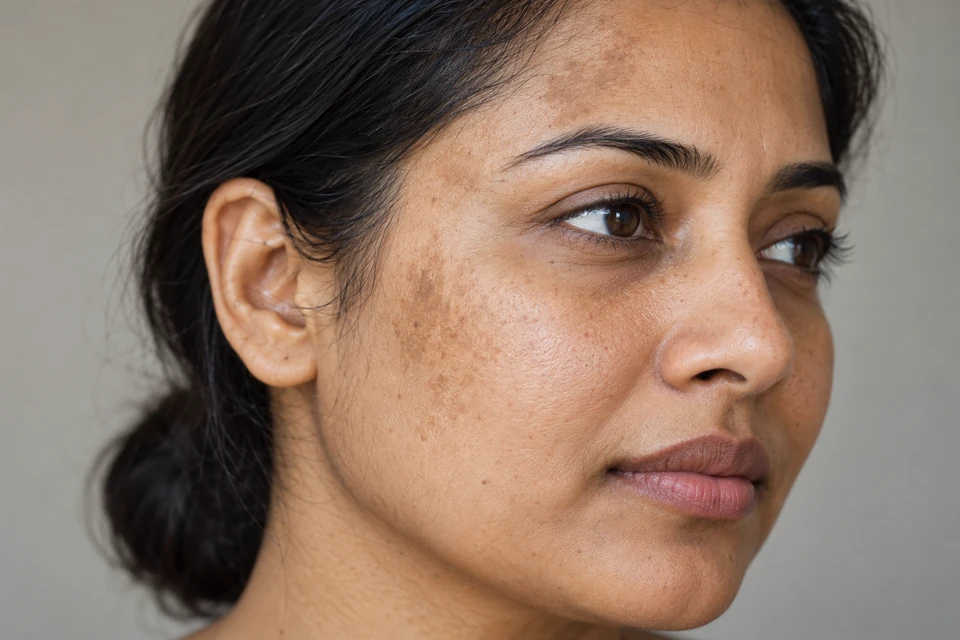
Melasma usually appears as fairly symmetrical brown patches on the cheeks, forehead, nose or upper lip. Sun, heat, visible light and hormones, including pregnancy and some contraceptives, can all play a part, and it often comes back.
Post-inflammatory pigmentation is darkening that follows acne, a rash, a burn or an aggressive treatment. It tends to sit exactly where the skin was inflamed.
Sun spots are flat, defined brown marks on areas that get the most sun over the years, such as the cheeks, hands and forearms.
Why the label matters
Treatments that suit one type can worsen another. Strong peels, harsh scrubs or unsuitable laser settings can trigger fresh pigmentation, especially in deeper Indian skin tones. Melasma in particular usually needs a gentle, long-term plan rather than one intensive fix.
What protects your progress
- Daily broad-spectrum sunscreen, reapplied when you are outdoors. Tinted formulas can add protection from visible light.
- Shade, hats and avoiding peak sun.
- Treating active acne early, so it leaves fewer marks.
- Avoiding self-treatment with unprescribed bleaching or steroid creams.
- Patience: improvement is measured in months, and maintenance matters.
Questions to ask at your consultation
- Which type of pigmentation do I have, and how deep is it likely to be?
- Which treatments could make my skin darker, and how will we avoid that?
- What should I use at home, and what should I stop?
- How will we judge improvement, and when?
This article is general information from the Cosmo Looks team. It is not a diagnosis or a substitute for an individual consultation.