What they have in common
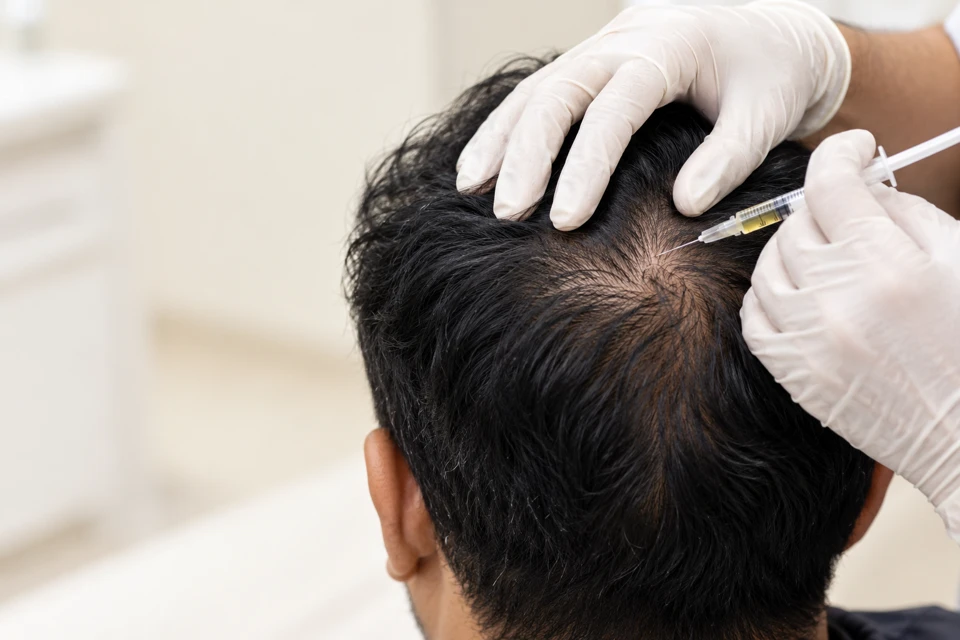
PRP (platelet-rich plasma) and GFC (growth factor concentrate) are both made from a blood sample taken at your visit. The sample is processed to concentrate parts of the blood linked to tissue repair, then injected into areas of the scalp where hair is thinning.
Neither creates new hair follicles. Both aim to support follicles that are still present, which is why a specialist first checks how much active hair remains in the thinning area. Where follicles are no longer active, neither option is likely to help on its own.
Where they differ
With PRP, the blood is spun so that platelets collect in a small volume of plasma, and that platelet-rich layer is injected. With GFC, the platelets are activated during processing so that the growth factors they release are collected, and that concentrate is injected instead.
PRP has been studied for longer, and published research for pattern hair loss is encouraging but mixed. GFC is newer, and there is less independent evidence for it. A good consultation should say this plainly rather than present either one as the advanced choice.
Who each may suit
Both are usually discussed for early to moderate pattern thinning in men and women, often alongside medicines your specialist may prescribe. They are less suitable if you have a bleeding disorder, take blood thinners, have an active scalp infection, or if the hair fall has another cause that needs treating first, such as a thyroid problem or low iron.
Questions to ask before you choose
- What is causing my thinning, and how was that confirmed?
- Why do you recommend PRP or GFC for me, rather than the other?
- How many sessions are planned, how far apart, and when is progress reviewed?
- How will my starting point be recorded, so we can compare fairly later?
- What does each session cost, and is maintenance expected after the first course?
This article is general information from the Cosmo Looks team. It is not a diagnosis or a substitute for an individual consultation.